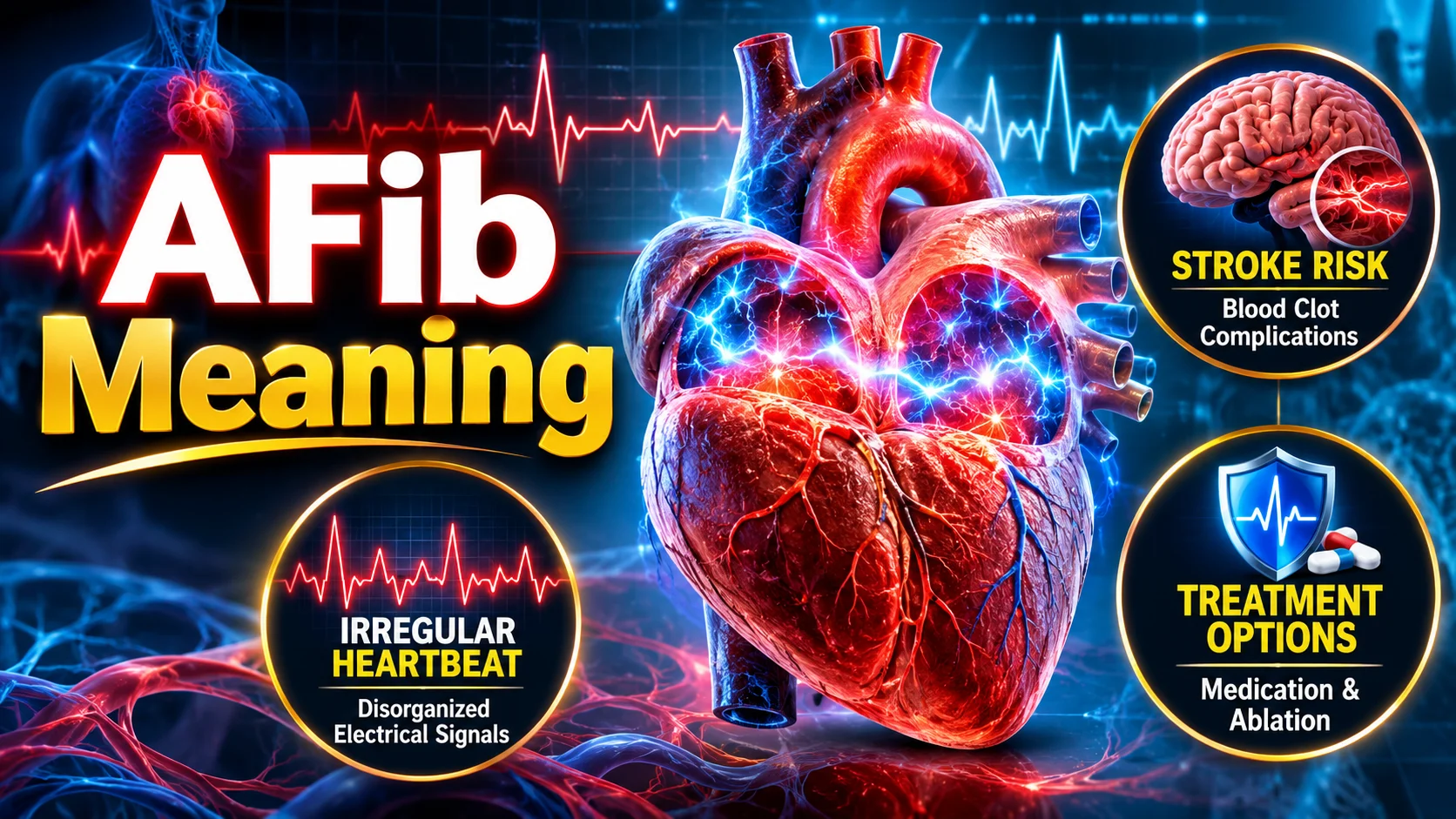
AFib stands for atrial fibrillation, a type of irregular heart rhythm (arrhythmia) that develops when the heart’s upper chambers, called the atria, receive disorganized electrical signals. Instead of contracting in a coordinated way, these chambers quiver or fibrillate. This can interfere with normal blood flow and allow blood to collect inside the heart, increasing the possibility of clot formation. AFib can be managed through medications, medical procedures, and lifestyle changes, depending on an individual’s condition and stroke risk.
Atrial fibrillation is a medical condition in which the heart’s electrical system produces irregular signals, disrupting the normal rhythm of the heartbeat. The term describes two things: the atria, which are the heart’s upper chambers, and fibrillation, which refers to rapid, uncoordinated contractions.
A healthy heart follows an organized electrical pathway. An area called the sinoatrial node, located in the right atrium, normally generates electrical impulses that coordinate each heartbeat. These signals travel through the heart, allowing its chambers to contract in the correct order.
During this condition, abnormal electrical impulses interfere with that process. The atria begin quivering rather than squeezing effectively, and the ventricles may receive irregular signals.
AFib is the most common type of sustained cardiac arrhythmia encountered in clinical practice. According to the Centers for Disease Control and Prevention (CDC), approximately 12.1 million people in the United States are projected to have the condition by 2050.
Importantly, an irregular heartbeat does not automatically mean someone has atrial fibrillation. Other rhythm disorders can produce similar sensations, so medical testing is necessary to identify the actual problem.
How Does AFib Affect the Heart?
To understand the condition, it helps to know how the heart normally works.
The heart has four chambers:
- Right atrium
- Left atrium
- Right ventricle
- Left ventricle
The atria receive blood returning to the heart, while the ventricles pump blood toward the lungs and the rest of the body.
Under normal circumstances, the upper chambers contract first, moving blood into the lower chambers. The ventricles then contract and send blood onward.
With atrial fibrillation, this coordination becomes disrupted. The atria receive multiple abnormal electrical impulses, causing their muscle fibers to contract irregularly.
As a result, blood may not move efficiently from the atria into the ventricles. Some blood can remain inside the atria, particularly in a small pouch called the left atrial appendage.
This is important because stagnant blood can encourage clot formation. If a clot travels through the bloodstream and reaches an artery supplying the brain, it can cause an ischemic stroke.
The ventricles may also beat too quickly or irregularly. When the heart cannot maintain an effective pumping rhythm over time, it may contribute to weakness, fatigue, and other cardiovascular problems.
Different Types of AFib
Doctors classify this condition according to how long episodes last and whether they stop without intervention.
| Type | Description | Typical Pattern |
|---|---|---|
| Paroxysmal AFib | Episodes begin and stop on their own. | Usually resolves within seven days, often much sooner. |
| Persistent AFib | The irregular rhythm continues for more than seven days. | Often requires medical treatment to restore normal rhythm. |
| Long-standing persistent AFib | The condition continues for at least 12 months. | Rhythm-control treatment may still be considered. |
| Permanent AFib | The patient and healthcare professional decide not to pursue further attempts to restore normal rhythm. | Management focuses on an agreed long-term treatment strategy. |
These categories describe the pattern of the condition, not necessarily how severe it is. Someone with occasional episodes can still have a meaningful risk of stroke.
A person’s treatment plan depends on several factors, including symptoms, heart function, medical history, and individual risk assessment.
Common Symptoms of AFib
Symptoms vary considerably. One person may experience an obvious racing heartbeat, while another may feel completely normal.
Some people discover the condition only after a doctor notices an irregular pulse or performs an electrocardiogram.
Common symptoms include:
- Heart palpitations: A fluttering, pounding, racing, or skipping sensation in the chest.
- Irregular heartbeat: The pulse may feel uneven or unpredictable.
- Fatigue: Everyday activities may become more tiring than usual.
- Shortness of breath: Breathing may feel difficult, particularly during physical activity.
- Dizziness: Disrupted circulation can cause lightheadedness.
- Weakness: Some individuals experience reduced energy or physical endurance.
- Chest discomfort: Pressure or pain may occur and requires urgent medical assessment.
Symptoms may appear suddenly and disappear after a short period. In other cases, they continue for hours or longer.
An important detail is that the absence of symptoms does not mean the condition is harmless. Even people who feel perfectly healthy can have an increased risk of blood clots and stroke.
Causes and Risk Factors
There is no single cause behind every case. AFib usually develops when changes in the heart’s structure or electrical signaling interfere with its normal rhythm.
Several health conditions and lifestyle factors can increase the likelihood of developing it.
1. High Blood Pressure
Long-term high blood pressure places additional strain on the heart. Over time, it can cause structural changes in the heart muscle and enlarge the atria, making abnormal electrical activity more likely.
2. Existing Heart Disease
Coronary artery disease, heart valve problems, and heart failure can affect the heart’s structure and electrical system.
People with previous heart surgery may also develop temporary or ongoing rhythm disturbances.
3. Increasing Age
The likelihood of developing this condition generally increases with age. Changes in heart tissue, accumulated cardiovascular damage, and other age-related health problems can contribute to the risk.
However, younger adults are not completely protected.
4. Diabetes and Obesity
Diabetes and excess body weight are associated with several cardiovascular changes that can increase the likelihood of developing irregular heart rhythms.
Managing blood sugar and maintaining a healthy weight can support overall heart health.
5. Sleep Apnea
Obstructive sleep apnea causes repeated interruptions in breathing during sleep. These episodes can place stress on the cardiovascular system and are associated with a higher risk of atrial fibrillation.
6. Alcohol and Smoking
Heavy alcohol consumption, particularly binge drinking, can trigger irregular heart rhythms in some individuals. Smoking is also associated with increased cardiovascular risk.
Some people notice that certain stimulants or substances trigger episodes, although individual responses vary.
7. Thyroid Problems
An overactive thyroid, medically known as hyperthyroidism, can increase heart rate and interfere with normal electrical activity.
Doctors may check thyroid function when investigating unexplained rhythm problems.
According to the National Heart, Lung, and Blood Institute (NHLBI), other associated factors include chronic kidney disease, lung disorders, family history, and certain infections.
Why AFib Can Be Dangerous
The main concern is not simply that the heartbeat becomes irregular. The condition can affect blood circulation and increase the risk of serious complications.
Increased Stroke Risk
Stroke is one of the most important complications associated with atrial fibrillation.
When the atria fail to contract effectively, blood can collect inside them. This creates an opportunity for clots to develop.
If a clot travels to the brain, it may block an artery and interrupt the supply of oxygen-rich blood. This can cause a stroke.
The American Heart Association reports that people with AFib have up to five times the risk of stroke compared with people who do not have the condition.
The actual risk varies according to factors such as age, previous stroke, high blood pressure, diabetes, and other medical conditions.
Doctors use validated risk-assessment tools to decide whether anticoagulant medication is appropriate.
Heart Failure
Another possible complication is heart failure.
When the ventricles beat too quickly over an extended period, the heart may struggle to pump blood effectively. Persistent rhythm problems can also contribute to weakening of the heart muscle.
Heart failure does not develop in everyone with this condition, but it is an important reason to seek appropriate treatment.
Reduced Quality of Life
Repeated episodes can interfere with sleep, exercise, concentration, and everyday activities.
Some people become anxious about unexpected palpitations or avoid physical activity because they are worried about triggering another episode.
Proper treatment and medical guidance can help many individuals regain confidence in their daily routines.
How Doctors Diagnose the Condition
A doctor usually begins by reviewing symptoms, medical history, medications, and cardiovascular risk factors.
The next step is checking the heart’s rhythm.
Electrocardiogram (ECG or EKG)
An electrocardiogram is the primary test used to confirm atrial fibrillation. It records the heart’s electrical activity through electrodes placed on the skin.
During an episode, the recording can show an irregular rhythm and the absence of normal, organized atrial electrical activity.
Holter Monitor
If episodes happen occasionally, a standard ECG may not capture them.
A Holter monitor is a portable device that records heart activity continuously, commonly over 24 to 48 hours.
Event Monitor
For less frequent episodes, doctors may recommend an event monitor or another longer-term recording device. These tools help identify rhythm changes that might otherwise go unnoticed.
Echocardiogram
An echocardiogram uses ultrasound to create images of the heart. It allows doctors to assess chamber size, valve function, and the heart’s pumping ability.
Blood Tests
Blood tests may help identify contributing problems, such as thyroid abnormalities, electrolyte imbalances, or kidney dysfunction.
Together, these tests help healthcare professionals confirm the diagnosis and select an appropriate treatment strategy.
Treatment Options for AFib
Treatment is individualized. Some people need medication and regular monitoring, while others may benefit from procedures that restore or maintain a normal rhythm.
There are three broad treatment goals: controlling heart rate, managing heart rhythm, and preventing blood clots.
1. Heart Rate Control
Rate-control medications help prevent the ventricles from beating excessively fast.
Common examples include:
- Beta blockers, such as metoprolol.
- Certain calcium channel blockers, such as diltiazem.
- Digoxin in selected patients.
These medications do not necessarily eliminate the irregular rhythm. Instead, they help control how quickly the heart beats.
2. Heart Rhythm Control
Rhythm-control treatment aims to restore or maintain a normal heart rhythm.
Doctors may prescribe antiarrhythmic medications, depending on the patient’s heart condition and other medical factors.
Another option is electrical cardioversion. During this procedure, a controlled electrical shock is delivered to the heart to help restore a regular rhythm.
3. Blood Thinners
Anticoagulants, commonly called blood thinners, reduce the likelihood of dangerous blood clots.
Examples include apixaban, rivaroxaban, dabigatran, and warfarin.
These medicines are not appropriate for everyone. Doctors assess stroke risk alongside bleeding risk before recommending them.
Patients should never start, stop, or change anticoagulant medication without medical guidance.
4. Catheter Ablation
Catheter ablation is a procedure that targets the abnormal electrical signals responsible for maintaining the rhythm disorder.
A doctor guides thin tubes called catheters through blood vessels toward the heart. Energy is then used to create small areas of scar tissue that block unwanted electrical signals.
Pulmonary vein isolation is a common ablation approach. It targets the electrical connections around the pulmonary veins, which frequently contribute to the initiation of AFib.
Ablation can reduce episodes and improve symptoms in suitable patients, although recurrence is possible.
5. Lifestyle-Based Management
Lifestyle changes can support medical treatment and reduce some contributing risk factors.
Doctors may recommend:
- Maintaining a healthy body weight.
- Participating in appropriate physical activity.
- Managing blood pressure.
- Limiting alcohol consumption.
- Quitting smoking.
- Treating sleep apnea.
- Managing diabetes and cholesterol.
- Following a balanced, heart-healthy diet.
These measures are helpful, but they should not replace prescribed treatment.
Living With AFib
A diagnosis does not necessarily mean someone must stop enjoying normal activities. Many people continue working, exercising, traveling, and spending time with family while managing the condition.
The key is understanding personal triggers and following a treatment plan.
Keeping a symptom diary can help. Recording when palpitations occur, how long they last, and what happened beforehand may provide useful information during medical appointments.
People who experience episodes after consuming alcohol, using certain stimulants, or sleeping poorly can discuss these patterns with their healthcare professional.
Regular follow-up appointments also matter. Doctors may need to review medications, heart rate, stroke risk, and treatment effectiveness over time.
Physical activity is generally encouraged when medically appropriate. However, exercise intensity should be discussed with a healthcare professional, particularly for people with additional heart conditions.
Most importantly, someone taking anticoagulants should follow the prescribed schedule carefully and understand what to do if a dose is missed.
Frequently Asked Questions
1. Is AFib a serious heart condition?
It can be serious because it increases the risk of blood clots, stroke, and heart failure. However, many people manage it successfully with appropriate treatment and regular medical care. Its seriousness depends on individual health factors and complications.
2. Can AFib go away on its own?
Some episodes stop without treatment, particularly in people with paroxysmal AFib. However, spontaneous improvement does not mean the underlying condition has disappeared permanently. Medical evaluation remains important even when symptoms resolve.
3. Can someone have AFib without knowing it?
Yes. Some individuals have no noticeable symptoms and discover the condition during a routine examination, ECG, or evaluation for another medical problem. This is one reason irregular heart rhythms can sometimes remain undiagnosed.
4. Does AFib always cause a fast heartbeat?
No. Although a rapid heartbeat is common, the ventricular rate can vary. Some individuals may have a relatively normal or even slow heart rate, particularly when taking certain medications or experiencing underlying conduction problems.
5. Can exercise trigger AFib?
Intense physical activity may trigger episodes in some susceptible individuals, particularly certain endurance athletes. However, moderate exercise is generally beneficial for cardiovascular health. People with diagnosed AFib should discuss a suitable exercise routine with their healthcare professional.
6. When should someone seek emergency medical attention?
Seek emergency medical help if an irregular heartbeat occurs with chest pain, severe breathing difficulty, fainting, or signs of stroke.
Stroke warning signs include sudden facial drooping, weakness in an arm or leg, difficulty speaking, or sudden vision problems. These symptoms require immediate emergency attention, even if they disappear.
Conclusion
Atrial fibrillation is more than an irregular heartbeat. It is a condition involving disrupted electrical signals in the heart that can interfere with normal circulation and increase the risk of stroke. Recognizing symptoms, understanding personal risk factors, and receiving an accurate diagnosis are important steps toward managing it. With appropriate medical treatment and healthy daily habits, many people can continue living active and fulfilling lives while keeping their heart condition under control.
Medical disclaimer: This article is intended for educational purposes and does not replace professional medical advice, diagnosis, or treatment. Anyone experiencing concerning heart symptoms should consult a qualified healthcare professional.

Nicole Stewart is a writer and blogger at NetWorthLink.com, turning complex money topics into clear, practical insights. She enjoys exploring finance, wealth and everyday strategies that help readers make smarter decisions.